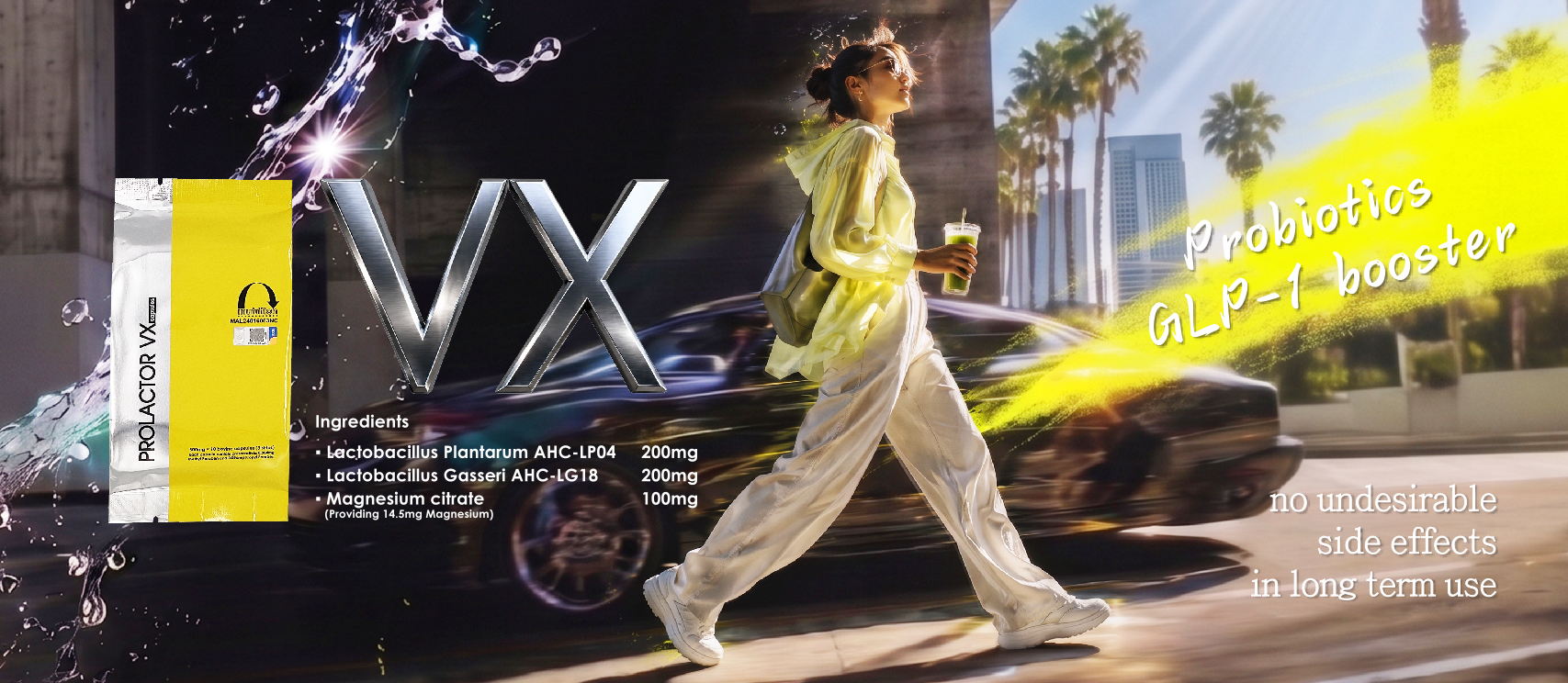
Ingredients:
Lactobacillus plantarum: 200mg / 10 Billion CFU
Lactobacillus gasseri: 200mg / 10 Billion CFU
Magnesium citrate: 100mg
With global rates of obesity, diabetes, and metabolic syndrome continuing to rise, probiotic innovation in metabolic health has definitively moved from exploratory to translational science. The foundation for microbial metabolic therapy was established when researchers discovered that microbial fermentation of dietary fibres directly stimulates the endogenous release of GLP-1 and promotes the differentiation of new GLP-1-producing L-cells in the colon. This led to the targeted isolation of potent anti-obesogenic strains, notably L. gasseri and L. plantarum.
Indications:
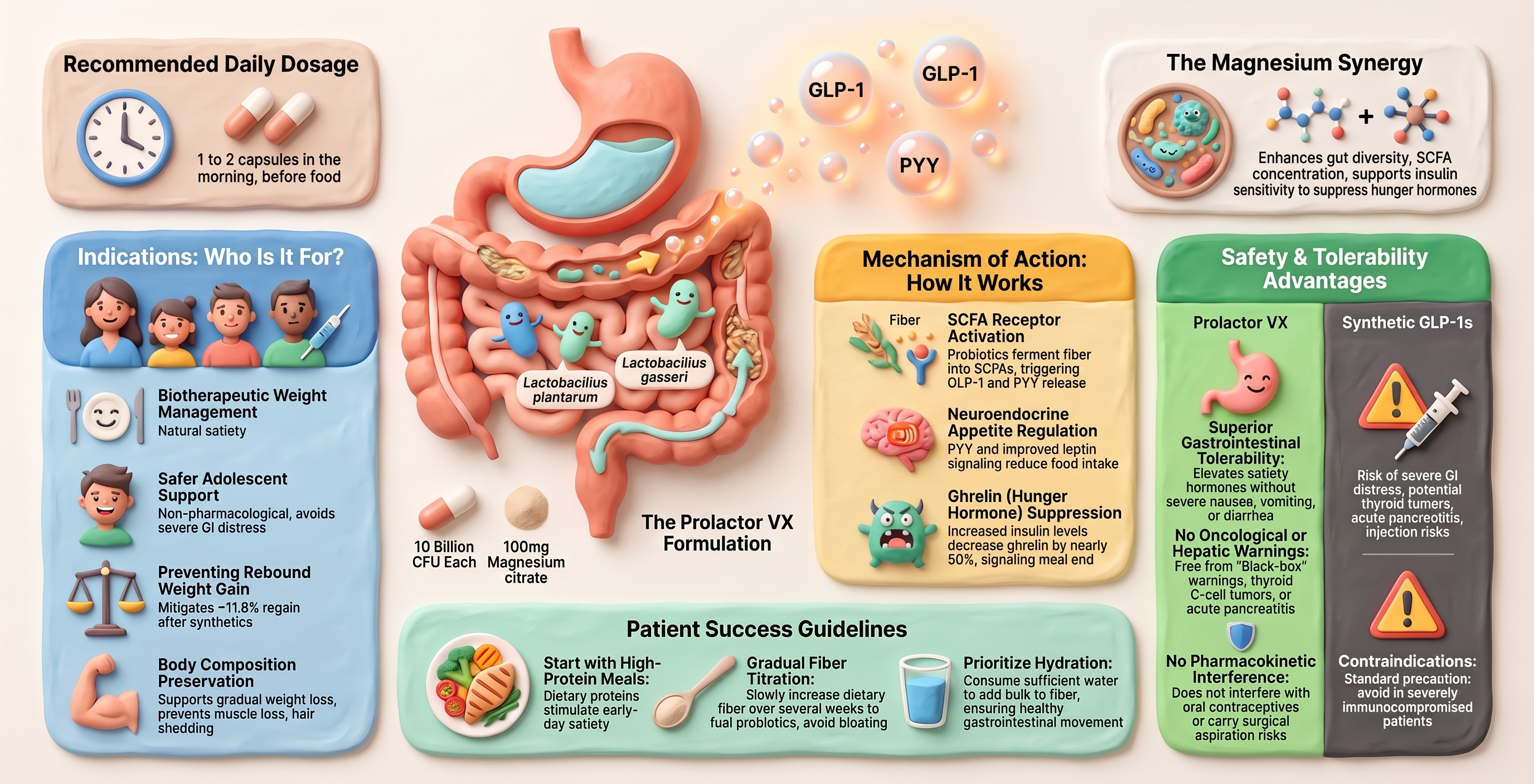
VX is an oral microbial booster designed to stimulate the endogenous production of GLP-1 and PYY, indicated for:
- Weight Management: Designed to support long-term weight management by promoting natural satiety and appetite regulation. It is an ideal starting intervention for needle-phobic patients, those seeking an affordable alternative, and patients who wish to avoid the strict dosage escalation (titration) schedules and severe gastrointestinal distress frequently experienced during the initiation of synthetic GLP-1 injectables.
- Safe Alternative for Adolescent Weight Management: While synthetic GLP-1 injections can successfully reduce body weight in adolescents—such as the 68-week trial by Weghuber et al. (2022) which demonstrated an average 16.1% weight loss using 2.4mg weekly subcutaneous semaglutide— they are frequently associated with severe gastrointestinal side effects (nausea, vomiting, and diarrhoea) that can cause treatment discontinuation. Prolactor VX offers a safer, non-pharmacological alternative for addressing childhood and adolescent obesity without the harsh, pharmacologically induced GI distress.
- Prevention of Weight Gain Rebound: Discontinuation of synthetic GLP-1s can lead to rapid weight regain and rebound hyperglycaemia; clinical data shows an average regain of 11.6% of body weight upon stopping semaglutide. Prolactor VX stimulates the body's endogenous production of GLP-1 and PYY to help support long-term metabolic balance and prevent this rebound "yo-yo" effect.
Weight Loss & Body Composition
In contrast, rapid weight reduction associated with synthetic injectables may lead to severe nutritional deficiencies and body composition issues, including telogen effluvium (hair shedding), sarcopenia (severe muscle loss), and significantly reduced skin elasticity.
Mechanisms of Action
- Direct SCFA Receptor Activation: The specific probiotic strains L. plantarum and L. gasseri survive in the colon by fermenting dietary fibres into Short-Chain Fatty Acids (SCFAs)—specifically acetate, propionate, and butyrate. These SCFAs bind directly to specific free fatty acid receptors (FFAR2 and FFAR3) on intestinal L-cells, serving as the precise trigger for the endogenous secretion of GLP-1 and Peptide YY (PYY).
- Neuroendocrine Appetite Regulation: PYY acts on the hypothalamus in the brain to reduce appetite and food intake, promoting feelings of fullness. Concurrently, by improving systemic metabolic health and lowering insulin resistance, this formulation helps preserve central brain insulin and leptin signaling. Both brain insulin and leptin act as vital anorexigenic hormones on the arcuate nucleus of the hypothalamus, reducing food intake by upregulating appetite-suppressing neuropeptides (such as POMC) and reducing appetite-stimulating neuropeptides (such as NPY and AgRP)
- Ghrelin Suppression via Insulin Modulation: GLP-1 naturally slows gastric emptying and enhances glucose-dependent insulin secretion. Elevated insulin levels play a critical role in satiety by acting as an independent determinant to suppress circulating ghrelin, an orexigenic gastric hormone frequently referred to as the "hunger hormone". Physiologically relevant increases in insulin decrease circulating ghrelin levels by almost 50%, providing a crucial physiological feedback loop for signaling meal termination.
- Magnesium Synergy: Magnesium administration enhances gut microbiota diversity and increases the concentration of SCFAs, effectively boosting the microbial fermentation required to stimulate the release of satiety hormones. Independently, magnesium supports insulin sensitivity—directly facilitating the insulin-mediated suppression of ghrelin—and acts as a key component in energy and lipid metabolism.
Patient Dietary Guidelines
Dosage: 1 to 2 capsules in the morning, administered before food.
GLP-1 naturally slows gastric emptying to moderate blood sugar spikes and prolong feelings of fullness, creating a theoretical potential for slower digestion. To complement Prolactor VX and proactively mitigate these effects, the following guidelines are recommended:
- High-Protein First Meal: Dietary proteins and their breakdown products (amino acids and peptides) directly interact with specific nutrient sensors on intestinal L-cells to potently stimulate endogenous GLP-1 release. A high-protein first meal establishes a stable glycaemic baseline and prolongs early-day satiety.
- Gradual Titration of Dietary Fibre: Adequate dietary fibre is actively required for Prolactor VX to work effectively, as it is the fuel for the SCFA fermentation process. Patients should be instructed to increase their dietary fibre intake gradually over several weeks to avoid temporary bloating and gas while their gut microbiome adjusts.
- Hydration: Patients should consume sufficient water to add bulk to the fibre in the stool, promoting healthy gastrointestinal movement and counteracting any potential constipation associated with delayed gastric emptying.
Safety Profile vs Synthetic GLP-1 Agonists
Prolactor VX stimulates endogenous hormone pathways, offering a vastly different safety profile compared to pharmaceutical GLP-1 receptor agonists, which carry the following warnings:
- Gastrointestinal Tolerability: Synthetic GLP-1 injectables are notorious for causing severe gastrointestinal adverse reactions, including severe nausea, vomiting, diarrhoea, and severely delayed gastric emptying (which precludes them from use in patients with severe gastroparesis). Prolactor VX elevates SCFAs naturally without causing this pharmacologically induced GI distress.
- Musculoskeletal Integrity: The rapid weight and muscle loss associated with synthetic GLP-1 injectables decreases the mechanical load on bones, which has been linked in clinical trials to an increased risk of bone fractures (e.g., foot/toe, lumbar spine/pelvis, and skull) in non-diabetic patients with obesity.
- Oncological & Hepatic Profile: Synthetic GLP-1s carry FDA black-box warnings for thyroid C-cell tumours and are strictly contraindicated for patients with a personal or family history of Medullary Thyroid Carcinoma (MTC) or Multiple Endocrine Neoplasia syndrome type 2 (MEN 2). Injectables are also associated with an increased risk of acute gallbladder disease (cholelithiasis) and acute pancreatitis. Prolactor VX utilises natural strains without these oncological or hepatic warnings.
- Pharmacokinetic Interactions: Due to significantly delayed gastric emptying, synthetic GLP-1s carry FDA warnings for an increased risk of pulmonary aspiration during general anaesthesia or deep sedation. Furthermore, this delayed emptying significantly reduces the absorption of orally administered medications; clinical data notes synthetic injectables can reduce the maximum concentration of oral contraceptives by up to 66%, necessitating the use of barrier contraception methods. Prolactor VX poses no surgical aspiration risk and does not interfere with the pharmacokinetics of oral contraceptives.
Contraindications
Prolactor VX should be avoided in severely immunocompromised patients, which is a standard medical precaution for all live probiotic supplements.
References:
- Afitova K, et al. (2021). Magnesium citrate supplementation decreased blood pressure and HbA1c in normomagnesemic subjects with metabolic syndrome: a 12-week, placebo-controlled, double-blinded pilot trial. Magnesium Research.
- Bodnaruc AM, et al. (2016). Nutritional modulation of endogenous glucagon-like peptide-1 secretion: a review. Nutrition & Metabolism.
- Constantine EP, et al. GLP-1 Receptor Agonists Increase Fracture Risk In Non-diabetic Patients With Obesity. CU Anschutz School of Medicine.
- FDA / Novo Nordisk. (2025/2026). OZEMPIC (semaglutide) injection Prescribing Information & RYBELSUS tablets Prescribing Information.
- Mahboubi M. (2019). Lactobacillus gasseri as a Functional Food and Its Role in Obesity. International Journal of Medical Reviews.
- Medical Article / FAQs. Semaglutide long-term side effects - what you need to know (0ipwf035).
- Medical News Today. (2025). Ozempic butt: Causes, how to avoid, and treatment.
- Medicines Adverse Reactions Committee. (2025). Possible interaction between GLP-1 receptor agonists and oral contraceptives.
- Memon H, et al. (2023). Effects of combined treatment of probiotics and metformin in management of type 2 diabetes: A systematic review and meta-analysis. Diabetes Research and Clinical Practice.
- Palana C, et al. (2024). Analyzing The Effects Of Semaglutide (Ozempic/Wegovy) On Metabolism: Investigating Correlations With Weight Reduction. Journal of Positive Psychology & Wellbeing.
- Sohn M, et al. (2023). Effect of Lactobacillus plantarum LMT1-48 on Body Fat in Overweight Subjects: A Randomized, Double-Blind, Placebo-Controlled Trial. Diabetes & Metabolism Journal.
- Watkins JD, et al. (2021). Protein- and Calcium-Mediated GLP-1 Secretion: A Narrative Review. Advances in Nutrition.
- Weghuber D, et al. (2022). Once-Weekly Semaglutide in Adolescents with Obesity. The New England Journal of Medicine.