
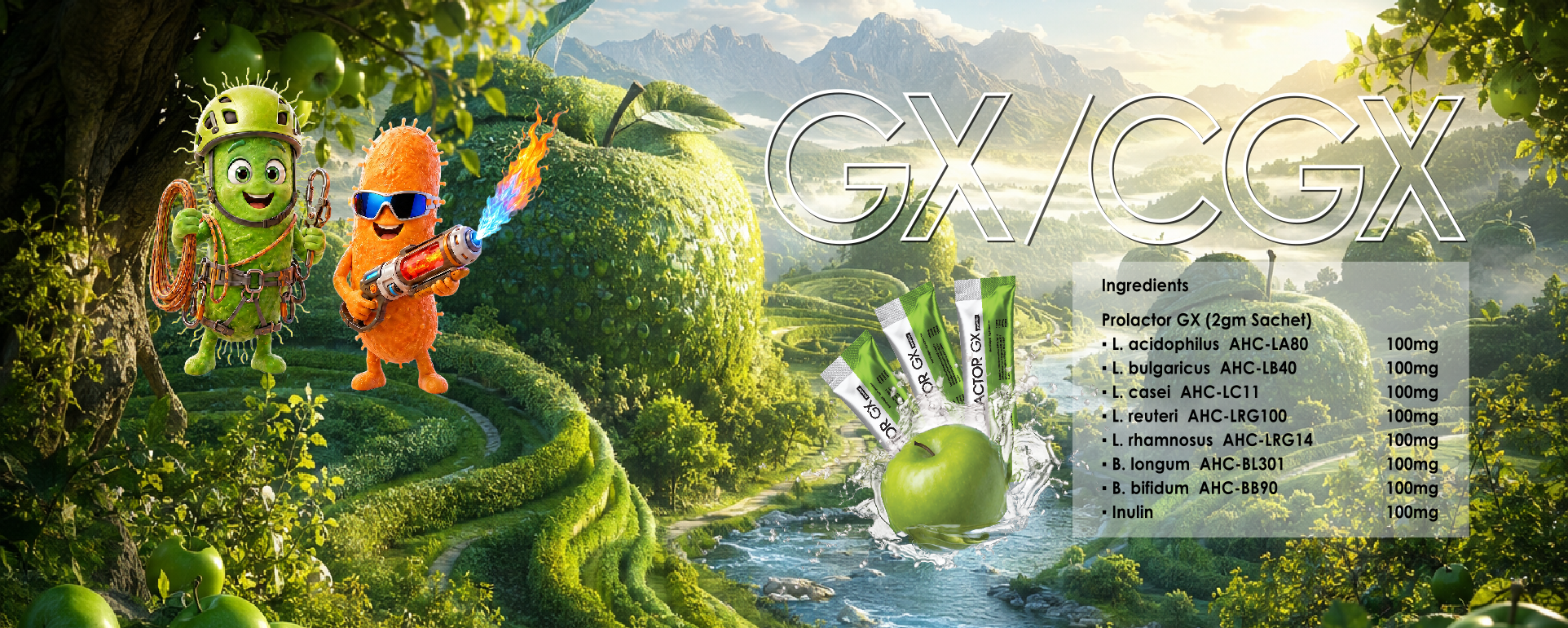


The Prolactor GX/CGX platform represents a precision-engineered synbiotic system designed for the strategic restoration of the human microbiome. In contrast to conventional probiotic supplements, this platform is built on an ecological engineering framework that integrates high- potency microbial strains with a targeted prebiotic kinetic core. It is indicated for clinical environments where rapid ecological stabilization and gut-barrier reinforcement are required following acute dysbiotic events or intensive medical interventions.
The architecture of the Prolactor GX platform is defined by a 2gm sachet delivery system. The formulation utilizes a precise weight-based split to ensure metabolic synergy and technological stability, as detailed in the profile below.
Prolactor GX (2gm Sachet)
Ingredients Profile
The platform is provided in two distinct delivery formats. Prolactor GX is a direct-consumption sachet utilizing Iprona’s clean-label, solvent-free Polyphenol Technology (IPT) to create a premium green apple base. Prolactor CGX is the clinical vegetarian capsule variant, containing the identical 7-strain profile and prebiotic load. This dual-format architecture ensures the high-potency synbiotic system is accessible across diverse clinical cohorts, significantly enhancing patient compliance through delivery flexibility.
In therapeutic microbiome engineering, palatability and delivery format are critical clinical variables that directly influence therapeutic efficacy. Sub-optimal adherence is a leading cause of therapeutic failure, particularly in intensive care or chronic management settings where patients exhibit physiological resistance to standard oral intake.
The Prolactor GX direct-consumption powder serves as a physical 'Compliance Engine.' This format is strategically engineered to overcome significant clinical barriers, including geriatric dysphagia and pediatric swallowing resistance. By eliminating the requirement for large oral solids, the platform mitigates "capsule fatigue" in polymedicated patients and provides a viable route for those suffering from acute nausea or fluid restrictions.
The integration of Iprona IPT technology converts the sensory experience into a biological driver for therapy completion. By providing a solvent-free, clean-label taste profile, Prolactor GX reduces drop-out rates in intensive care and acute recovery settings. This transition from "medication" to a palatable delivery format is essential for ensuring the biological necessity of successful bacterial transit and subsequent colonization.
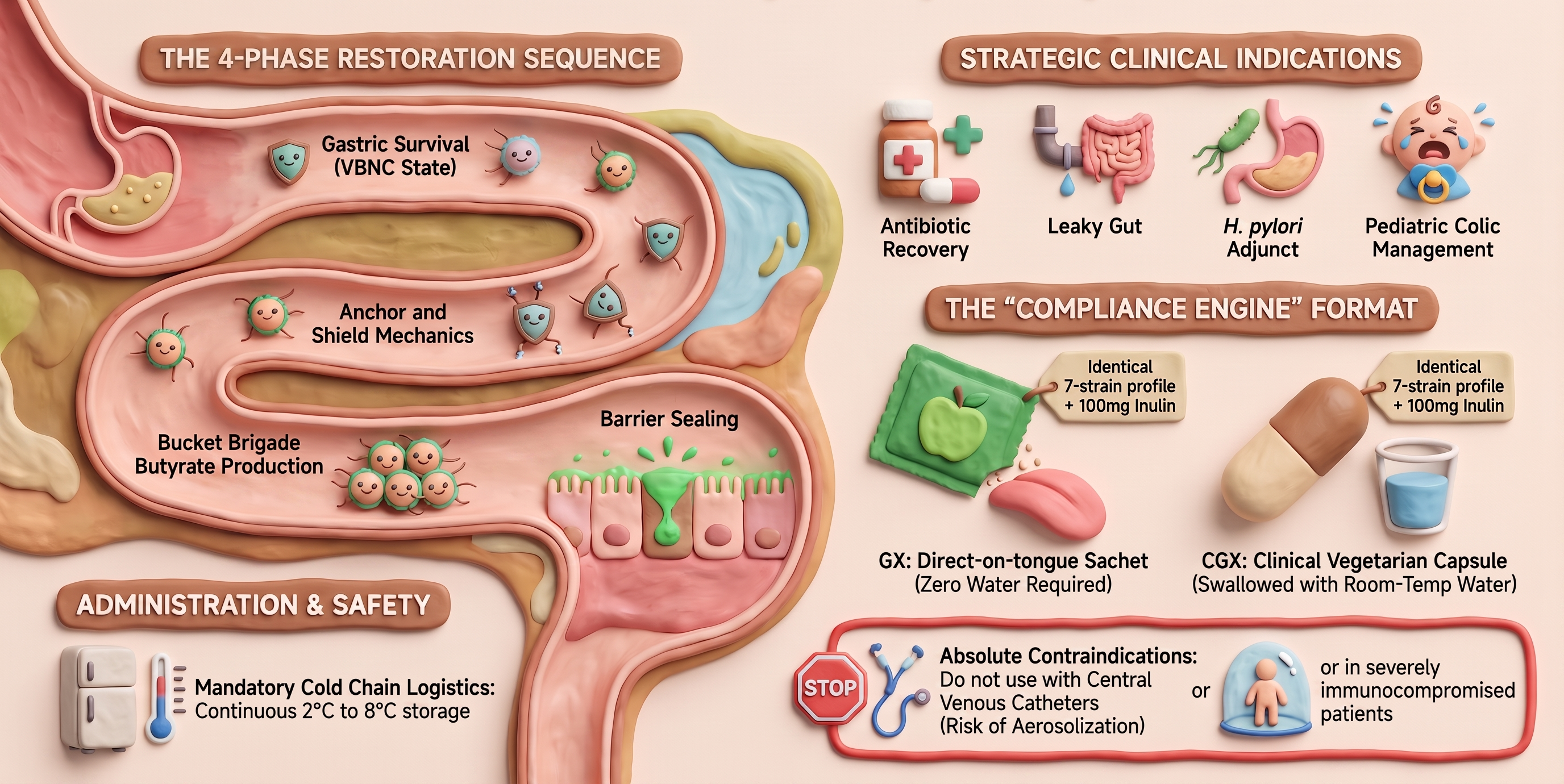
The Prolactor GX/CGX mechanism of action is defined as a coordinated, five-phase ecological engineering process designed to rebuild the gut-immune axis.
The 5-Phase Sequence:
Phase 1: VBNC Transit Survival: To survive gastric acidity and bile salts, the strains utilize the Viable But Non-Culturable (VBNC) state. This dormant posture creates a protective structural armor around the cell membranes, ensuring high viability during transit.
Phase 2: Pre-Loaded Inulin: Upon reaching the small intestine, the 100mg Inulin core eliminates therapeutic lag-time. By providing an immediate, high-energy fuel source, the bacteria bypass the need to search for native substrates and begin metabolic functions instantly.
Phase 3: The 'Anchor and Shield': The system establishes mucosal dominance via specialized strain mechanics. L. rhamnosus AHC-LRG14 utilizes the SpaCBA pili mechanism (hair-like grappling hooks) to anchor tenaciously to the mucus. Simultaneously, L. reuteri AHC-LRG100 secretes reuterin, which induces pathogen oxidative stress through the targeted modification of protein thiol groups, clearing the ecological space.
Phase 4: Oxygen Scrubbing: The Lactobacillus strains act as aggressive environmental modifiers, consuming residual oxygen. This prepares the strictly anaerobic environment required for the survival of oxygen-sensitive Bifidobacteria.
Phase 5: The Cross-Feeding 'Bucket Brigade': In the anaerobic colon, a deterministic metabolic chain reaction occurs: Lactobacilli produce lactate, which Bifidobacteria convert into acetate. Native commensals convert this acetate into terminal Butyrate, providing the essential energy for tight-junction sealing.
This deterministic sequence ensures that the intervention translates into a functional repair of the mucosal barrier and stabilization of the gut-immune axis.
A tiered probiotic portfolio is a medical necessity to ensure targeted intervention and prevent product cannibalization. Clinicians should utilize "ecological titration," matching the intensity of the intervention to the severity of the patient's dysbiosis.
The 3-Tier Clinical Ladder:
Tier 1: Acute Fluid Response (Prolactor BDii): Indicated for emergency secretory diarrhea. This tier utilizes Saccharomyces boulardii and Zinc to manage acute fluid loss.
Tier 2: Acute Ecological Defense (Prolactor GX/CGX): The high-intensity, multi-strain protection tier. This is the primary intervention for broad-spectrum antibiotic co-prescription, leaky gut syndrome, and severe barrier breakdown where rapid 7-strain restoration is required.
Tier 3: Long-Term Ecosystem Maintenance (Prolactor G1): The cost-effective foundational solution for chronic care. While GX utilizes 100mg of Inulin for rapid kinetics, G1 utilizes a baseline 5.4mg GOS prebiotic profile to maintain the gut architecture once acute symptoms have stabilized.
This laddering logic allows the physician to escalate or de-escalate therapy based on clinical progress and specialty-specific needs.
The Prolactor GX/CGX platform addresses the multi-systemic influence of the gut-immune axis across several specialties:
Gastroenterology
Severe intestinal barrier breakdown ("leaky gut").
Management of acute dysbiosis and post-infectious recovery.
Adjunct therapy for H. pylori eradication (enhancing success rates and reducing side effects).
General Practice:
Microbiome recovery following broad-spectrum antibiotic therapy.
Management of acute non-watery gastroenteritis.
Pediatrics Geriatrics:
Reduction in crying time for infantile colic (supported by L. reuteri clinical data).
Rotavirus recovery and compliance-sensitive cohort administration (dysphagia-friendly).
Immunology Dermatology:
Prevention and management of atopic eczema (Gut-Immune-Skin axis).
Modulation of systemic immune responses.
The technical preservation of probiotic viability is a prerequisite for therapeutic efficacy. Viability is maintained through strict technical protocols.
Directions for Use:
Prolactor GX Sachets: Administered as a direct-on-tongue powder. Requires zero water for ingestion.
Prolactor CGX Capsules: Swallowed whole with room-temperature water.
Cold Chain Logistics: The Prolactor platform relies on continuous 2°C to 8°C storage. This temperature control is mandatory to physically protect the VBNC dormant state. Premature activation caused by thermal exposure leads to metabolic exhaustion before the product reaches the target site. Continuous cold chain maintenance from production to patient delivery is a non-negotiable efficacy standard.
Physician oversight is mandatory for high-risk cohorts to prevent adverse outcomes.
Contraindications:
Central Venous Catheters (CVCs): Probiotics are strictly contraindicated for patients with indwelling vascular lines. The powder format (GX) carries a higher risk of aerosolization and accidental contamination of the catheter site compared to capsules, increasing the risk of Catheter-Related Bloodstream Infections (CRBSI) and bacteremia.
Severely Immunocompromised Cohorts: Patients undergoing active chemotherapy or organ transplant recipients are at risk of microbial translocation and sepsis.
Severe Acute Pancreatitis: Per clinical guidelines, probiotics may be associated with increased mortality risks in this specific cohort.
Side Effects: Mild side effects such as transient gas or bloating may occur during the initial "bucket brigade" stabilization. These are typically self-limiting and resolve as the ecosystem rebalances.
Q1: When should I escalate from Prolactor G1 to GX? Escalation is warranted for acute cases requiring rapid intervention, such as during high-dose antibiotic therapy or severe gut barrier disruption. GX provides 100mg of Inulin—a significant increase over G1’s 5.4mg GOS—ensuring accelerated metabolic kinetics.
Q2: Does AHC-LRG14 possess the same mechanics as L. rhamnosus GG? Yes. AHC-LRG14 utilizes the SpaCBA pili mechanism to anchor to the intestinal mucosa, ensuring extended therapeutic residence time.
Q3: What is the molecular mechanism of L. reuteri AHC-LRG100? It secretes reuterin, which induces oxidative stress in pathogens by modifying protein thiol groups, creating a deterministic antimicrobial shield.
Q4: Why is the GX sachet preferred for acute nausea? The GX sachet utilizes zero-water, direct-on-tongue delivery. This avoids the fluid volume requirements of capsules, which can trigger emesis in sensitive patients.
Q5: How does Inulin improve the MOA? Inulin acts as a "kinetic fuel," allowing the bacteria to bypass the lag-time required to hunt for native substrates upon waking in the small intestine.
Q6: What is the risk of GX powder in the ICU? In patients with CVCs, the powder format presents a risk of CRBSI via aerosolized translocation. CGX capsules are safer but still require caution in the presence of vascular lines.
Q7: Is the cold chain required for both formats? Yes. Both GX and CGX require 2°C to 8°C storage to preserve the VBNC dormant state and prevent premature metabolic exhaustion.
Q8: Can GX be used for H. pylori? Yes. The 7-strain profile and reuterin secretion provide a potent adjunct to conventional triple therapy, increasing eradication rates and reducing antibiotic side effects.
8. References