
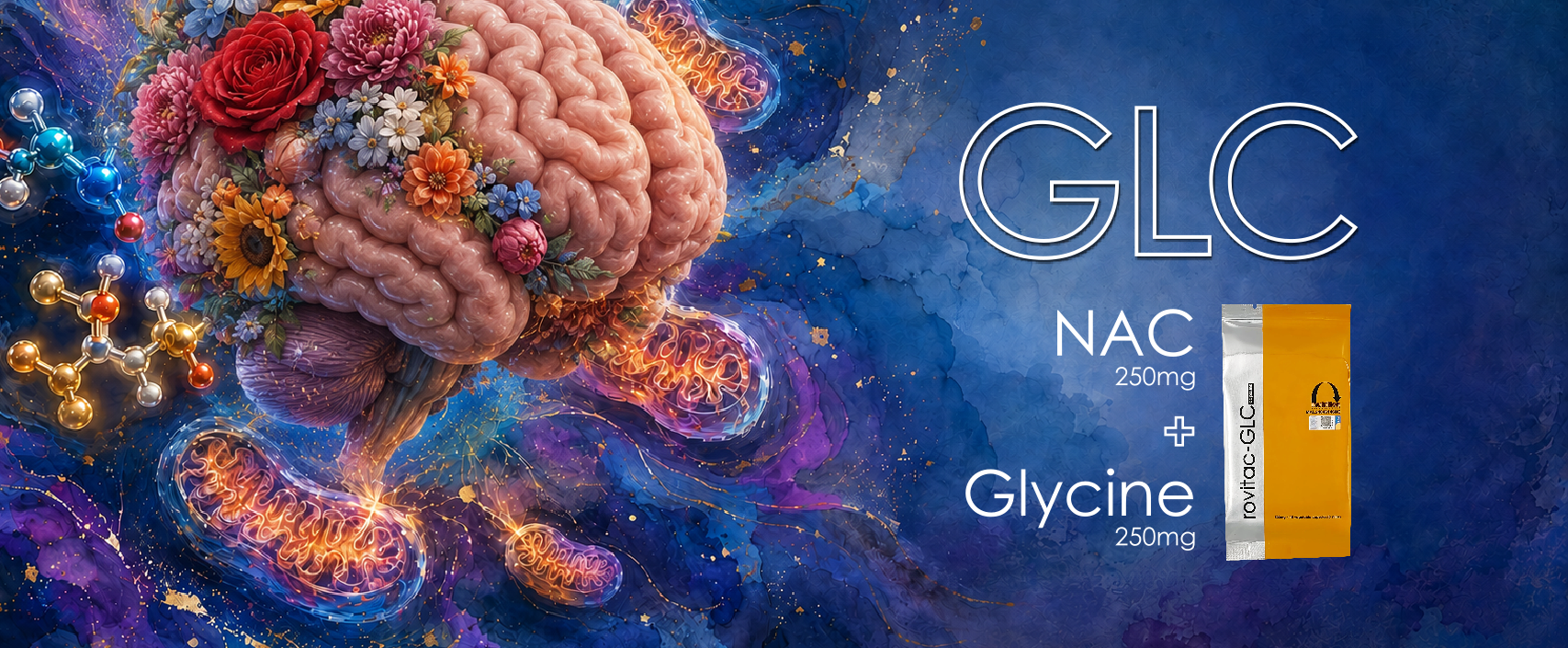

Rovitac GLC is designed for intracellular restoration. It functions as a precursor-synthesis system, providing the specific substrates necessary to remediate systemic oxidative stress and mitochondrial dysfunction at their cellular source.
| Active Components | Dosage | Pharmacological Role |
|---|---|---|
| N-Acetyl L-Cysteine (NAC) | 250 mg | Cysteine donor and sulfhydryl (-SH) provider; essential for energy metabolism, protein disulfide bond formation, and metal ion binding. |
| L-Glycine | 250 mg | Methyl donor (-CH3) and neurotransmitter substrate; crucial for collagen synthesis, cartilage maintenance, and the regulation of gene expression. |
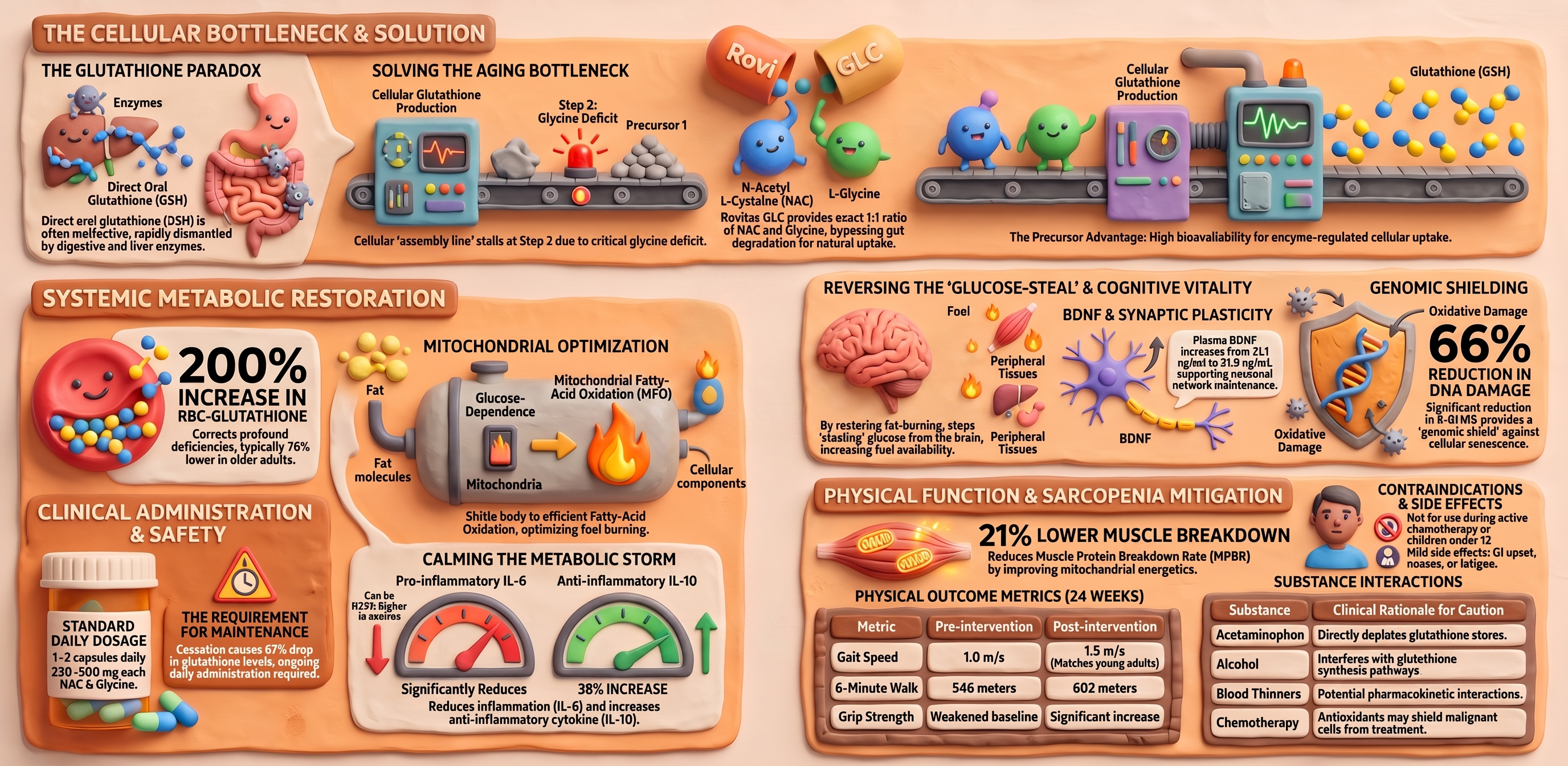
Resolving Intracellular Supply Chain Bottlenecks The 1:1 stoichiometric ratio of NAC to Glycine in Rovitac GLC is engineered to resolve a specific supply chain bottleneck prevalent in aging cells. Data indicate that while the cellular machinery required to synthesize glutathione remains present and functional in older adults, the assembly line stalls due to a critical substrate deficit. This balanced approach ensures that cells possess the necessary raw materials to satisfy internal stoichiometric demand, transitioning the patient from a state of substrate-limited deficiency to metabolic adequacy. This restoration provides the essential precursors required for the critical enzymatic activity of glutamate cysteine ligase and glutathione synthase.
2. Bypassing the Glutathione Paradox
Direct oral supplementation with glutathione (GSH) is suboptimal due to the "Glutathione Paradox": as a complete tripeptide, GSH is highly vulnerable to gastrointestinal degradation. Upon ingestion, it is rapidly dismantled by digestive and liver enzymes, preventing the intact molecule from reaching the bloodstream or crossing cellular membranes in therapeutic concentrations.
The intracellular synthesis of Glutathione follows a structured two-step process:
The Precursors
By utilizing small-molecule precursors, Rovitac GLC achieves a "Precursor Advantage." These components possess high bioavailability and bypass gut degradation. This allows for natural, enzyme-regulated cellular uptake, providing the limiting reagent (glycine) required for the cell to resume its own production of GSH. The resulting restoration of intracellular concentrations serves as the physiological foundation for the systemic metabolic benefits described in the following section.
3. Systematic Metabolic and Biochemical Benefits
Correcting the "metabolic storm" associated with aging—characterized by elevated TBARS and F2-isoprostane—is essential for achieving systemic homeostasis. Rovitac GLC intervenes in these pathways to reverse age-related biochemical decline across multiple metabolic domains:
These systemic metabolic corrections provide the physiological environment necessary to improve neuro-cognitive outcomes and cerebral fuel availability.
4. Neuro-Cognitive Enhancement: Reversing the "Glucose-Steal"
Cerebral fuel availability is a strategic priority in mitigating age-related cognitive decline. In older adults, a phenomenon known as the "Glucose-Steal" often compromises mental clarity. Because the rate of glucose production does not increase with age, the available glucose pool remains zero. When peripheral tissues with impaired mitochondrial function cannot effectively burn fat, they become glucose-dependent, effectively "stealing" the fuel required by the central nervous system.
Rovitac GLC reverses this competition by restoring peripheral mitochondrial fatty-acid oxidation. As non-brain tissues return to fat utilization, they relinquish the glucose pool, making it available for cognitive requirements.
Biomarkers of Cognitive Vitality and Genomic Protection
The recovery of cognitive vitality and genomic stability is inextricably linked to physical independence and the prevention of sarcopenia.
5. Physical Function and Sarcopenia Mitigation
Effective sarcopenia management requires a strategy that targets muscle protein breakdown (catabolism) rather than merely focusing on synthesis. Rovitac GLC addresses the catabolic sarcopenia landscape by reducing the stress that forces the body to divert amino acids toward energy generation.
| Physical Outcome Metric | Pre-intervention (Older Adults) | Post-intervention (24 Weeks) |
|---|---|---|
| Gait Speed | 1.0 m/s | 1.5 m/s (Matches young adults) |
| Grip Strength | Weakened baseline | Significant increase (Dominant/Non-dominant) |
| 6-Minute Walk Test | 546 m | 602 m (Significant distance increase) |
Analytical data confirms a 21% reduction in the Muscle Protein Breakdown Rate (MPBR). By improving mitochondrial energetics, Rovitac GLC preserves muscle architecture and slows the rate of wasting, providing a necessary counter-balance to age-related muscle loss. These findings lead directly to the following dosing and administration protocols.
6. Dosing Guidelines and Administration
There is a need to distinguish between the intensive, weight-based protocols used in research and the simplified protocols utilized for standard daily support.
The Requirement for Maintenance A critical finding of the 12-week withdrawal phase in trials was the "Maintenance Dependency" of the intervention. Upon cessation of supplementation, RBC-glutathione levels dropped by 67% and oxidative markers rebounded toward baseline. Because natural precursor availability declines persistently with age, ongoing daily administration is required to prevent the recurrence of metabolic and oxidative defects. While the efficacy profile is robust, clinical implementation requires a thorough understanding of safety boundaries and potential drug interactions.
7. Safety: Contraindications and Drug Interactions
The "Antioxidant Surge Paradox" necessitates caution in specific clinical contexts. High antioxidant levels, while protective for healthy tissue, can inadvertently shield malignant cells from the oxidative damage that pro-oxidative therapies, such as chemotherapy, are intended to inflict.
Contraindications
| Substance | Clinical Rationale for Caution |
|---|---|
| Acetaminophen | Metabolism directly depletes glutathione stores, counteracting the metabolic intent of GlyNAC. |
| Blood Thinners | Potential pharmacokinetic interactions affecting efficacy. |
| Severe Hypertension Meds | Risk of altered vascular response and drug metabolism. |
| Cyclosporine A | Known interaction profile with NAC and Glycine. |
| Alcohol | Interferes with glutathione synthesis and metabolic pathways. | |
Potential side effects:
The side-effect profile for Rovitac GLC is generally mild, including gastrointestinal upset, nausea, fatigue, or localized rashes.
Rovitac GLC serves as a robust tool for transitioning patients toward a baseline of homeostatic health and physical vitality.
References: