

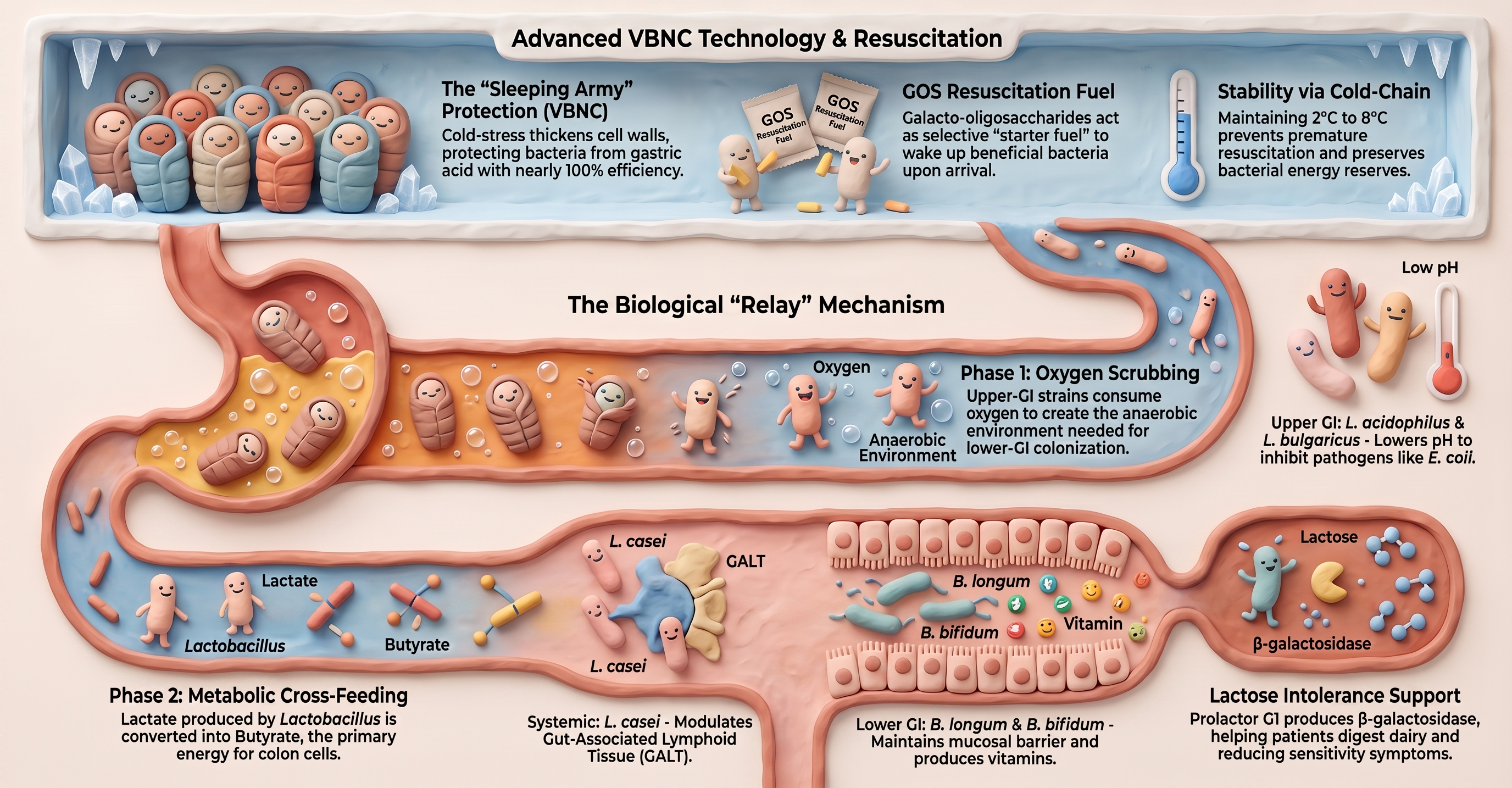
A multi-strain probiotic formulation (10B CFU) stabilized in a VBNC (Viable But Non-Culturable) state and fortified with Galacto-oligosaccharides (GOS).
1. The Core
G1 is engineered to provide "Total-Gut Coverage" by utilizing species with distinct environmental preferences:
2. Advanced Synergy
The 23-year success of G1 is attributed to two specific synergistic pathways:
3. VBNC & GOS Technology
4. FAQ
Q: Why choose 10B CFU over higher-dosed competitors?
A: Effectiveness is based on viability, not input. Standard "active" probiotics suffer massive "die-off" in the stomach. G1's VBNC cells act as a "sleeping army," passing through the stomach protected and resuscitating at the target site with nearly 100% efficiency.
Q: Is the product safe for lactose-intolerant patients?
A: Yes. L. bulgaricus and L. acidophilusare prolific producers of $\beta$-galactosidase, which helps the patient digest lactose, often reducing the symptoms of dairy sensitivity.
Q: How should the cold chain be managed in a clinical setting?
A: Store between 2°C and 8°C. While the VBNC state is resilient, extended exposure to heat can trigger "premature resuscitation," causing the bacteria to exhaust their energy reserves before they reach the patient's gut.
References
1. Akiyama, T., et al. (2015). GOS consumption by Bifidobacteria. Bioscience, Biotechnology, and Biochemistry.
2. Dempsey, E., & Corr, S. C. (2022). Lactobacillus spp. for GI Health. Frontiers in Immunology.
3. Galdeano, C. M., & Perdigόn, G. (2006). L. casei and mucosal immunity. Clinical and Vaccine Immunology.
4. Li, L., et al. (2014). The VBNC state in probiotics. Frontiers in Microbiology.
5. Yao, S., et al. (2021). B. Longum and IBD protection. Journal of Immunology Research.
6. Pakdaman, M. N., et al. (2016). L. acidophilus and lactose intolerance. Journal of Functional Foods.
7. Vulevic, J., et al. (2008). GOS and the fecal microbiota. The Journal of Nutrition.
8. Signoretto, C., et al. (2000). Cell wall changes in VBNC states. Applied and Environmental Microbiology.